
Every iteration of the Netflix true crime series Monster has been met with some form of backlash. Now Monster: The Ed Gein Story co-creator Ian Brennan has now responded to the critics for this latest iteration of the series.
As the name suggests, Monster: The Ed Gein Story revolves around the crimes of killer and grave robber Ed Gein who resultingly inspired several of Hollywood‘s biggest horror movies. However, some viewers feel like Monster: The Ed Gein Story is glamorizing Gein and his crimes, and Brennan has responded.
As shared in an interview with THR, Brennan feels quite strongly about the series and its portrayal of Gein, which he insists is not intended to be exploitative. Here’s what he stated:
“This show is always trying to not be exploitative. It’s trying to actually show that you can pull back too much when you’re telling a macabre story. It’s important that you tell the whole story even with the parts that are hard to watch.
“I don’t think this season’s sensational at all. I think it’s sensationally good, but it’s a real deep dive into a very strange and important touchstone of the 20th century. It just happened to be this very lonely, strange, mentally ill man in the middle of nowhere in Wisconsin who had this enormous cultural footprint that changed pop culture.”
Brennan further explained that their goal was to tell a story about mental illness and why Gein committed the crimes he did:
“Ed at its core is a story of mental illness. It was as important for us to show the horror of his inner life and his sort of prison that his brain was trapped in to show that horror as it was about this or that kill, per se … Ed Gein had a different brain, and he wasn’t able to have the perspective to look at something and put it away in a compartment. He saw images and was obsessed with that. He saw things that his brain couldn’t unsee. It started with all the stuff that came out of the Holocaust, which Vicky’s [Krieps] character portrays so brilliantly, just the horrors of the banality of what happened in the Nazi concentration camps. And he couldn’t get it out of his head.”
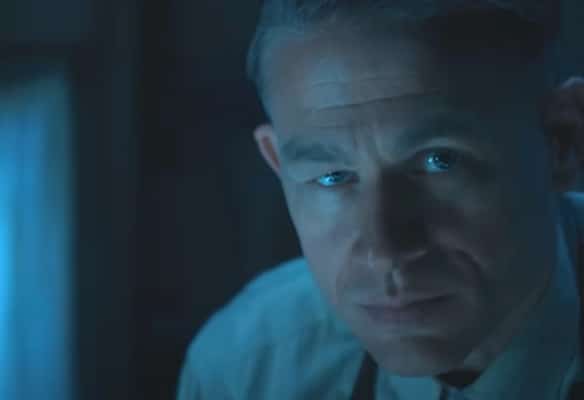
Of course, there is a moment in Monster: The Ed Gein Story where Charlie Hunnam’s fictionalized version of Gein looks at the camera to break the fourth wall and make the following statement: “You’re the one who can’t look away.”
Brennan tries to explain this moment and what it could mean, specifically regarding Hollywood and how they’ve glamorized Gein and his crimes to create their own horror stories:
“This is the [season] that looks at the question most squarely of what happens when you see horrific things. It’s also a way for us to turn the camera on ourselves to be like, ‘No, we’re aware that we’re also doing the thing of showing something that maybe you shouldn’t be looking at’ … Psycho was Albert Hitchcock topping what had come before it. And then Texas Chain Saw Massacre was Tobe Hooper topping what Hitchcock had done. And so it’s this process of having to continually out-scare ourselves. And I think we wanted to really probe that question of: Is this what people should be watching?”
Of course, that does tend to circle back to the complaints that the series is exploitative. Either way, it’s an interesting exploration of Ed Gein and how his crimes have impacted American pop culture. And, to this day, the release of Monster: The Ed Gein Story proves that audiences are still just as shocked by his horrific story.
Stay tuned to ScreenGeek for any additional updates regarding Netflix and their shows including Monster as we have them. Now that they’ve wrapped up their tale on Ed Gein, we’ll have to see what else Monster might have to offer in the future.