
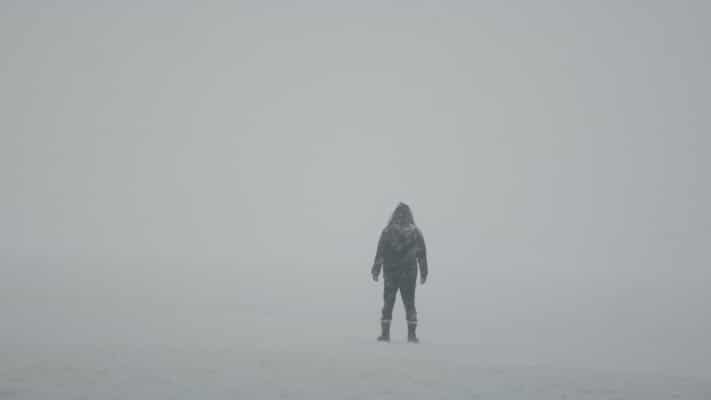
The found-footage genre was well established in cinema thanks to the mega-hit The Blair Witch Project. That little film that could helped fill the early 2000s with found-footage films that pretty much saturated the market over time. Some franchises still thrive on that style of filmmaking, like The V/H/S movies, while others land with a thud. However, filmmakers Mallory Drumm, Alex Lee Williams, and Jay Drakulic are hoping to change that with their self-financed movie, Dream Eater.
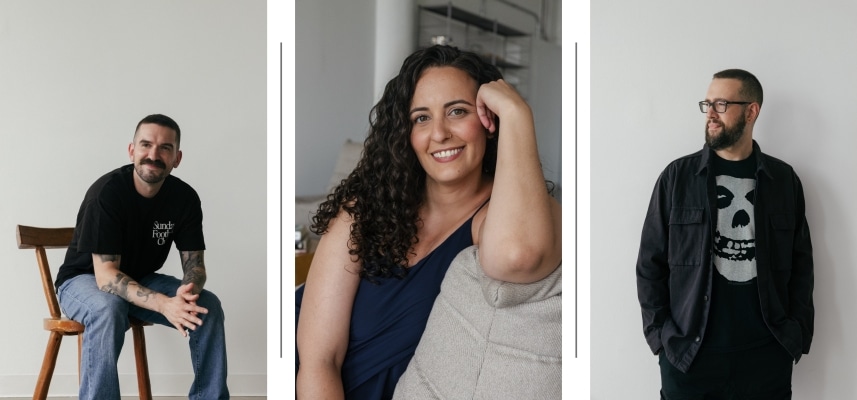
The trio has been working together for 11 years, producing corporate and commercial videos through their own video production company, Blind Luck Pictures. The gang was already gun-ho to make their second feature and were tired of waiting for the studio and distributors to give them the okay. After taking their own experience with parasomnias from family stories to the page, the filmmakers set their sights on their next movie, and a genuinely original idea came to fruition.
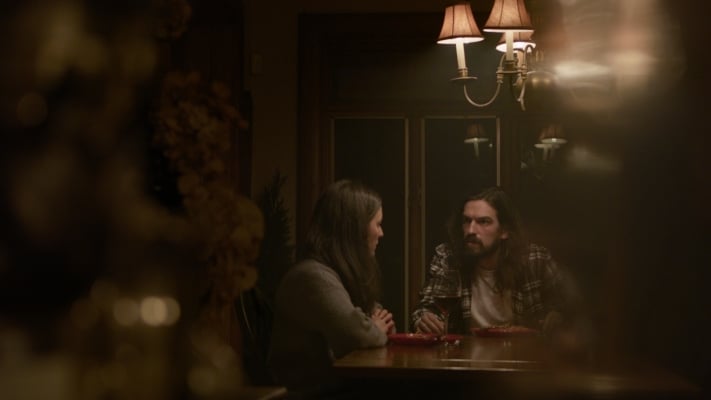
The 2025 film Dream Eater, co-written and co-directed by the trio, follows Mallory (Drumm) and Alex (Williams) as they try to get to the bottom of Alex’s parasomnia. What unfolds are deep paranormal elements that will push the couple to their limit and scare the piss out of audience members.
This Candie Indie began making the rounds in the film world, landing in the hands of filmmaker Eli Roth and his studio, The Horror Section. Roth has been championing the film and getting the word out about these talented filmmakers, hoping to catapult them into household names in cinema. We got a chance to talk to the filmmakers about their creative process, their passion for making the Dream Eater, and their hopes for continuing the film’s universe in sequels.
You guys talked about waiting to get Dream Eater off the ground, and the financing was a big holdup. Could you go into a bit more detail about that?
Mallory Drumm: Making movies in Canada is difficult. We had been pitching a few studios and distributors on a couple of ideas. No one was really biting, and I think we were kind of just all a little tired of waiting around for permission. So, we just all looked at each other and we were like, “Okay, what’s an idea that we have that we want to make a movie about?” We have a video production company that we run here in Toronto, where we do corporate videos and commercial work.
We essentially were just like, “Okay, every gig that we take, we’re going to put money aside for rent and just the food to sustain us. Then everything else goes into the movie fund.” Then, once we figured out that amount, we said, “We think we can make something with this.” It was off to the races, and we all said, “Let’s just do it. Let’s write about something that we care about and make a movie that we really want to see.” That’s kind of how Dream Eater came together.
I read that the production budget was close to $40,000 US, and you shot the film in 9 days, correct? That’s pretty impressive.
Mallory Drumm: Yeah, it was $50,000 Canadian. We shot it over nine days, and I think there were maybe four outdoor days when we did some pickups. So, it was tight.
Jay Drakulic: Yeah, Canadian Indie to the bone, man. Bootstrapped the whole thing. It’s one of those things you’re always asking other people for their money and to take a bet on you. It’s like, what better way to prove to people that you know how to value money and you’ll put it up on screen than by spending your own? Because people early on were like, “What are you f***ing crazy?” Or, “Get a house or do the adult things, put something towards your pension.” But it’s like if you believe in it, it’s like betting on yourself.
It’s like Mallory said, it’s a story that you believe in, it’s a film that you believe in, go out and do it. And yeah, it was one of those things that was scary. It was a really big risk for us, but it was one of those things where we just tallied up what we needed to survive for the month. Everything else we earned outside of that with our video production company literally went to the movie fund, and then, before you know it, we had the capital that we needed. And like Mallory said, we were off to the races.
That also offers the opportunity in filmmaking to get creative. “We can’t get the monster that we want, so let’s go ahead and get creative.” That can lead to way scarier, more natural elements in film.
Alex Lee Williams: Yeah, in Canada, too, because a lot of the US productions come through Canada. I remember a friend of ours who’s out in St. John’s —they were shooting an episode of Severance —and they said, “You have no idea any f**king problem; they just threw money at it.” I was like, “What does that even mean? Threw money at it.” Because all that we do is just, if there’s a problem, like throw your body at it. That’s what just ended up on the screen in the movie. So it definitely sparks a lot of interesting problem-solving. Which, at the end of the day, when you’re watching the movie back and the sequence works, you know, “Oh, we had to pivot and we had to figure this out.” It makes it that much more rewarding because, at the end of the day, the audience doesn’t know how it was all put together.

Alex and Mallory both suffered from parasomnia. Alex suffered from night terrors to sleepwalking, and Mallory suffered from night terrors. Was there anything you guys learned from your experience that you used to inform your character or how to act in a certain way in Dream Eater?
Alex Lee Williams: Yeah, Jay suffered from sleepwalking, and Mel and I both suffered from night terrors growing up. So, also the thing that we really wanted to hit on is that everyone can relate to going to sleep. And if you’re not a single person, everyone can relate to going to sleep next to their partner. So we had a lot to draw on, and we knew we could get to people in their most vulnerable places. What’s scarier than the idea of sleeping next to someone that you can’t trust, and do you ever really know the person that you’re sleeping next to? We really wanted to f**k with people’s expectations of their partner moving forward. We’ve gotten some really great responses from that, which is dope. But when we had those first conversations about it, we asked, “Well, what are some of the things that Alex is going to do and how is Mallory going to respond to those things?”
A lot of those were actually informed by past experiences that our families had to tell us about. So, Alex standing in the doorway is a funny story of Jay and Mallory, Jay’s brother growing up, he said one night, “Dude, what the hell are you doing?” He’s just standing there mumbling to himself, and he is like, “I think he’s going to f**king kill me.” There were a lot of things to pull on. Then [we thought] “Okay, great. How do we turn this into a cinematic moment we can really weave into our narrative and then build on every night? Making sure that each night keeps growing.”
I see this is the group’s second feature film working together, correct?
Alex Lee Williams: Yeah.
What’s your guys’ collaborative process for putting everyone’s ideas into a script and then getting behind the camera?
Mallory Drumm: Yeah, I mean, we literally do everything together. The three of us will write together. We will shot list together, and we will direct together. After over a decade of knowing and working with each other, we implicitly trust one another, and we all have vastly different tastes. So it’s great because when Alex comes up with an idea and it goes through Jay and me, then it becomes that idea, but better—same thing when I come up with something, or same thing when Jay comes up with something. With Dream Eater, Jay was the one who was behind the camera for the majority of it. Alex and I really looked to Jay and trusted him.
Whenever we would do a shot, we would kind of look at him and just know that he understood what we wanted from it. We trust him so implicitly that we just look to him, and if we saw the double thumbs-up from behind the camera, we knew we got [it] and we could move on, sort of thing. But we always have this motto: “It’s no ego filmmaking,” and we truly live by it. Like I said, we’ve kind of just developed our own language, the three of us. So, the best idea wins, from scripting all the way through to editing, final, and post-production. When you get to work with your best friends, it’s just easy.
Jay Drakulic: You think there’s a lot of compromises that are made being a trio, but in fact, like Mallory said, all that happens is it gets better, sharper. I think, just, it’s like forming Voltron, man. Honestly, it’s become this force that’s bigger than what we could be, bigger than the sum of its parts when we kind of join forces as Blind Luck Pictures. So it’s one of those things, and to what Mallory said, when you trust and love the people that you’re making this with, it’s not only something that is so profoundly satisfying to do, but it’s something that feels like you’ve now made it with family. We’ve been doing this for 11 years, and we’re not stopping. We’re going to keep this train on the tracks.

Dream Eater was made on a low budget, and let’s say someone comes to you with an offer to remake the movie on a bigger budget with more effects. Is there any concept or any changes you would make if given that offer?
Jay Drakulic: I can tell you right now, we wouldn’t change the actors. That’s for God damn sure, because Mallory and Alex f**king killed it. But I mean, that’s the thing. When you’re an artist, I think you always have this inclination to keep adding brush strokes. I guess my answer would be “no.” We didn’t make it as “found footage” is kind of like, “Oh, well, that’s all we can afford.” It was a story designed to be told through found footage, and it was achievable. We always talk about how the constraints you’re handed don’t have to be limitations. They don’t have to put you in a box. If you’re prepared enough, they can actually be creatively quite liberating. So no, I think if you now put more money towards this film or if you change something about it, it’s not that movie anymore. It’s not this intimate story about these characters at this cabin in the woods, going through all this relationship stuff and dealing with this parasomnia.
For me personally, no. This is the movie it was meant to be, and I’m really, really proud of [it]. Mallory always called it the little movie that could, and we believed in it from the get-go. While 50 Grand Canadian might not seem like a lot in terms of budget, it’s a lot in your life as things get more and more expensive. So you’ve got to believe in it. You’ve got to f**king go in ten toes down all about the movie, all that matters, right? So yeah, for me, no. I wouldn’t change anything about Dream Eater from a budget perspective.
Alex Lee Williams: I wouldn’t change a thing either, because if one thing were different, then that creates another. If one scene were shot differently—if we did one more take that affected what we did next—it’s just a domino effect of change. Which means that maybe Chuck [Shaughnessy] didn’t like it as much, which means that it never made its way to Eli [Roth], which means that we’re not here talking to you right now. So absolutely nothing changed. Give us less money. It’d probably be even better.
Do you see this story of Dream Eater continuing as a sequel, or is this the end of the road for it?
Alex Lee Williams: With any luck.
Jay Drakulic: Yeah, man, it’s a sandbox we’d love to play in again. We knew going into this that we had four walls, a roof outside the cabin, and a small secondary property. So we really tried to develop the two-thirds of the iceberg beneath the water, focusing on the lore and what goes into this movie and its backstory. We really designed it to be something much bigger than it appears on the surface. There’s a lot there to unpack. We purposely just dipped our toes into certain things within the movie because we were like, “We don’t want to have a big exposition dump.”
We don’t want to now just be like, “Okay, cool, wrap everything up.” We love it when there’s a certain kind of creepy loose ends that leave you wondering whether or not a sequel is made. “Oh s**t. What else is going to happen in this universe or to these characters or whatever?” That was something we always kind of designed just to be. If it were possible, the forces that be would kind of put us in a position where we can now go back and play with these pretty sinister, creepy ideas we developed. Hell yeah, man, we’d love to.
What are you guys’ next project? What are you guys working on now?
Mallory Drumm: We’ve got a couple of exciting irons in the fire right now. I think at the end of the day, we’re horror fans and horror filmmakers first. So the next thing we do, we just want to terrify audiences again. We want to amp up everything we did with Dream Eater, make it that much scarier, and just continue down that path. There are a few things we’re working on that are all super exciting, but at the end of the day, it’ll be horror, and hopefully it’ll scare audiences first and foremost.
Dream Eater is currently in theaters.