
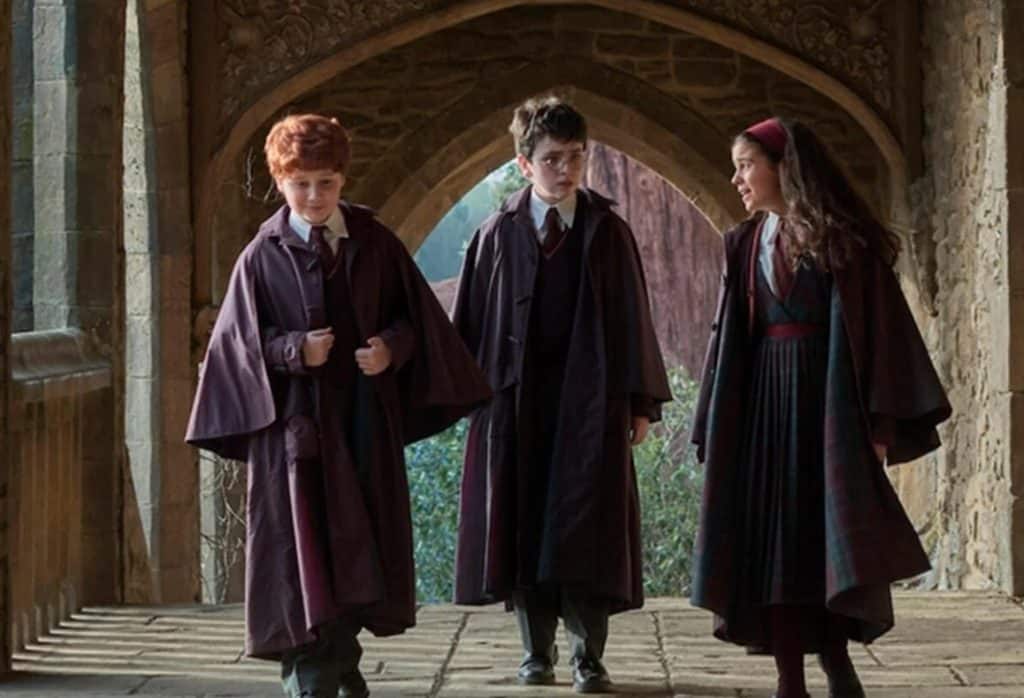
The Wizarding World is officially returning to the screen – this time as a series. The newly released trailer for the upcoming Harry Potter adaptation has reignited excitement among fans, offering the first real look at how the beloved books are being reimagined for television.
The teaser opens with a familiar but more grounded look at Hogwarts School of Witchcraft and Wizardry, trading the grand cinematic glow of the films for a moodier, more atmospheric style. The tone immediately feels more faithful to the pacing of the original novels by J. K. Rowling, with quieter character moments mixed in alongside flashes of magic and tension.
The biggest headline, though, is the cast – finally confirmed after months of speculation. Newcomer Dominic McLaughlin takes on the role of Harry Potter, bringing a younger, more book-accurate portrayal of the character. Alongside him, Arabella Stanton plays Hermione Granger, while Alastair Stout steps into the role of Ron Weasley. Early reactions to the trio have been largely positive, with fans noting how closely they resemble the original descriptions from the books.
The adult cast is equally noteworthy. Paapa Essiedu appears as Severus Snape, a casting choice that has already sparked discussion but also intrigue given his strong dramatic background. John Lithgow is confirmed as Albus Dumbledore, suggesting a more authoritative and layered take on the headmaster. Meanwhile, Janet McTeer portrays Minerva McGonagall, and Nick Frost appears as Rubeus Hagrid.
Visually, the trailer leans into a more detailed, serialized storytelling approach. There are glimpses of iconic moments – letters flooding Privet Drive, students arriving at Hogwarts, and early hints of the mystery surrounding Lord Voldemort – but everything feels slower and more character-driven. This aligns with the show’s reported structure, which aims to dedicate each season to a single book.
Overall, the trailer signals a fresh start for the franchise. Rather than trying to replicate the movies, this series appears focused on diving deeper into the source material, with a new cast and a long-form format that could finally give the full story room to breathe.